I have not once met a person associated with fitness who said “I want to get fatter”. We all want to lose fat, and it doesn’t matter if we are male or female, or if we are already generally lean. We want those striations and muscles to show and not be covered up in stubborn fat right? Well luckily the developers over at N2bm understood this, and they came up with the best spot fat reducing product on the market called Yohimflame.
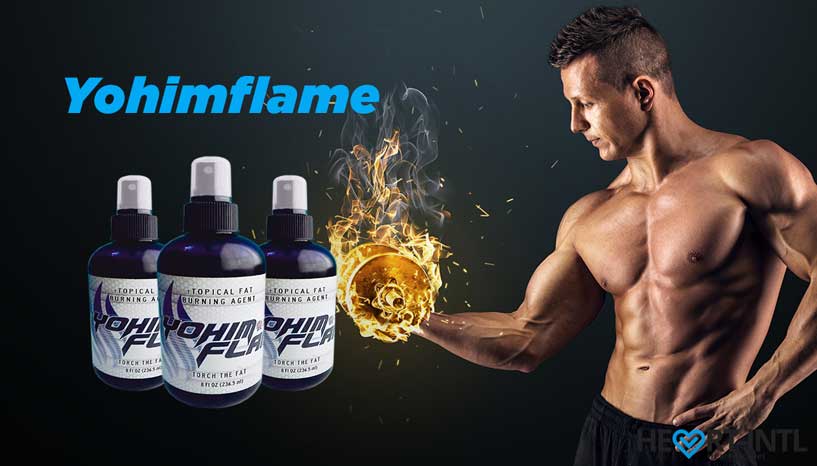
Table of Contents
Stubborn fat sucks!
Both genders have specific areas where they are more prone to store fat. Even men who are under 10% body fat will still have fat deposits which are difficult to get rid of. These areas are typically on the stomach.
On the female side, even those who are under 16% body fat may still have stubborn fat in their stomach, glutes, and thighs.
And What Most Experts Are Telling You Are Plain WRONG
Most people you ask think that if you go to the gym and spot train an area that magically the fat will burn away. Heck, even personal trainers and coaches believe this for whatever reason. I am here to tell you that they are WRONG! You cannot spot train away body fat! Why do you think every franchise gym has fat people doing ab crunches and they STAY FAT! You have to drop your total fat percentage and you have to use Yohimflame to burn away those stubborn fat deposits that our body does not want to give up.
What is yohimflame exactly?
Yohimflame comes in a spray bottle. It doesn’t involve taking anything orally or injecting. All you do is spray on the skin and let it absorb and do its job. Later in this article, I will show you exactly what sort of dosage you need and how best to use it. But first, let me tell you what the developers put in this amazing product so you can understand why it works so well.
Ingredients
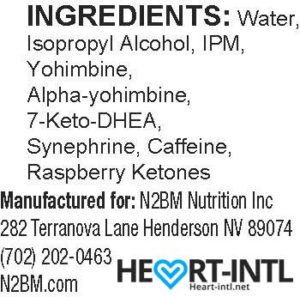
Yohimflame was developed by a team of researchers, who were themselves gym rats, and wanted to become more defined and ripped. Their idea was to put together a legal formula, that you can spray on a particular spot, which gets rid of the fat safely and efficiently. After years of trying out formulas, they settled on this exclusive ingredient list:
Water, IPM, and isopropyl alcohol are inactive ingredients to help absorption, bring stability, and provide liquidity.
 Alpha-Yohimbe and Yohimbine
Two of the most important active ingredients are Alpha-Yohimbe and Yohimbine which come from the African Yohimbe trees. The cool thing about these 2 compounds is that they block alpha2 receptors, so your body is forced to use extra fat deposits for energy. They also have been shown to stimulate the sympathetic pathway to promote fat metabolism and fat loss. You may have used these two compounds in oral form effectively, however here you don’t have to worry about that loopy and nauseous feeling you get from ingesting stimulants.
Percentage of body fat significantly decreased in the yohimbine group after the supplementation protocol (9.3 +/- 1.1 vs. 7.1 +/- 2.2%; p < 0.05). Furthermore, fat mass was significantly lower in the yohimbine versus placebo trial at postsupplementation assessment (7.1 +/- 2.2 vs. 9.2 +/- 1.9%; p < 0.05)…No subject reported any side effects from yohimbine. – PUBMED
7 Keto-DHEA
The next active ingredient I want to talk about is 7 Keto-DHEA, which is a metabolite of dehydroepiandrosterone (DHEA). It helps boost fat loss, metabolism and also blocks out the nasty hormone cortisol. Cortisol is released during stressful situations and if it is elevated you simply will not be able to burn fat.
Synephrine
Next, we have synephrine which comes from citrus. You may have heard that certain fruits contain ingredients that burn fat, and this is actually accurate and the developers decided to use this in the formula. This particular compound blocks both A receptors from storing body fat.
p-Synephrine alone as well as in combination products were shown to increase resting metabolic rate and energy expenditure – A Review of the Human Clinical Studies Involving Citrus aurantium (Bitter Orange) Extract and its Primary Protoalkaloid p-Synephrine
Caffeine
We couldn’t have a fat burning product without including pure caffeine which works in conjunction with the other ingredients to increase fat burn. Caffeine raises thermogenesis and metabolic rate.
Raspberry Ketone
Raspberry Ketone rounds out the ingredients and is derived from berries. It helps with fatty acid release, noradrenaline boost, and helps raise lipase enzymes. Your fat loss will exponentially increase thanks to this ingredient reinforcing the formula.
RK prevented the high-fat-diet-induced elevations in body weight and the weights of the liver and visceral adipose tissues (epididymal, retroperitoneal, and mesenteric). RK also decreased these weights and hepatic triacylglycerol content after they had been increased by a high-fat diet. RK significantly increased norepinephrine-induced lipolysis associated with the translocation of hormone-sensitive lipase from the cytosol to lipid droplets in rat epididymal fat cells. – Anti-obese action of raspberry ketone.
Dosage and use
Yohimflame directions are very simple. Shake the bottle rigorously then apply 8 pumps to your stubborn fat area and let absorb for a few minutes. I recommend using before fasted cardio or before a weight training session. Do not use near bedtime as it may interfere with your sleep.
Stacking
I recommend stacking Yohimflame with Cardarine GW501516 and N2burn. It can also be stacked with any type of anabolic steroid stack to increase fat burn.
Side effects
Yohimflame is legal, safe, nonhormonal and nonsuppressive. If you take while dehydrated and get too much sun it can cause some light headedness. I recommend drinking plenty of water and not exposing yourself to too much sun while using the product.
User reviews
Brian says “I am 8% body fat but could never see my abs due to annoying stomach fat that will not go away. I started using Yohimflame 6 weeks ago by squirting all over my stomach before my morning cardio. Now my abs are defined and all the ladies are taking notice at the beach.”
Stacy says “I am a bikini competitor and Yohimflame works! Ever since I started using it on my stubborn fat areas I have been earning much better grades by judges.”
Samir says “I was never a guy who was in great shape. I started working out 6 months ago and have built some nice lean muscle, however, I still have stubborn fat on my chest and back. I started using Yohimflame and after 8 weeks I can actually see my muscles moving while I workout! Awesome!”
You can read more user reviews at evolutionary.org and elitefitness.com.
Where to purchase
Yohimflame is sold at Amazon and N2bm.com.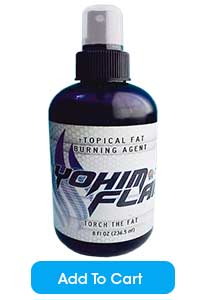
Yohimflame Review
-
Promote fat metabolism and fat loss
-
Use extra fat deposits for energy
-
Blocks out cortisol
-
Raises thermogenesis and metabolic rate